
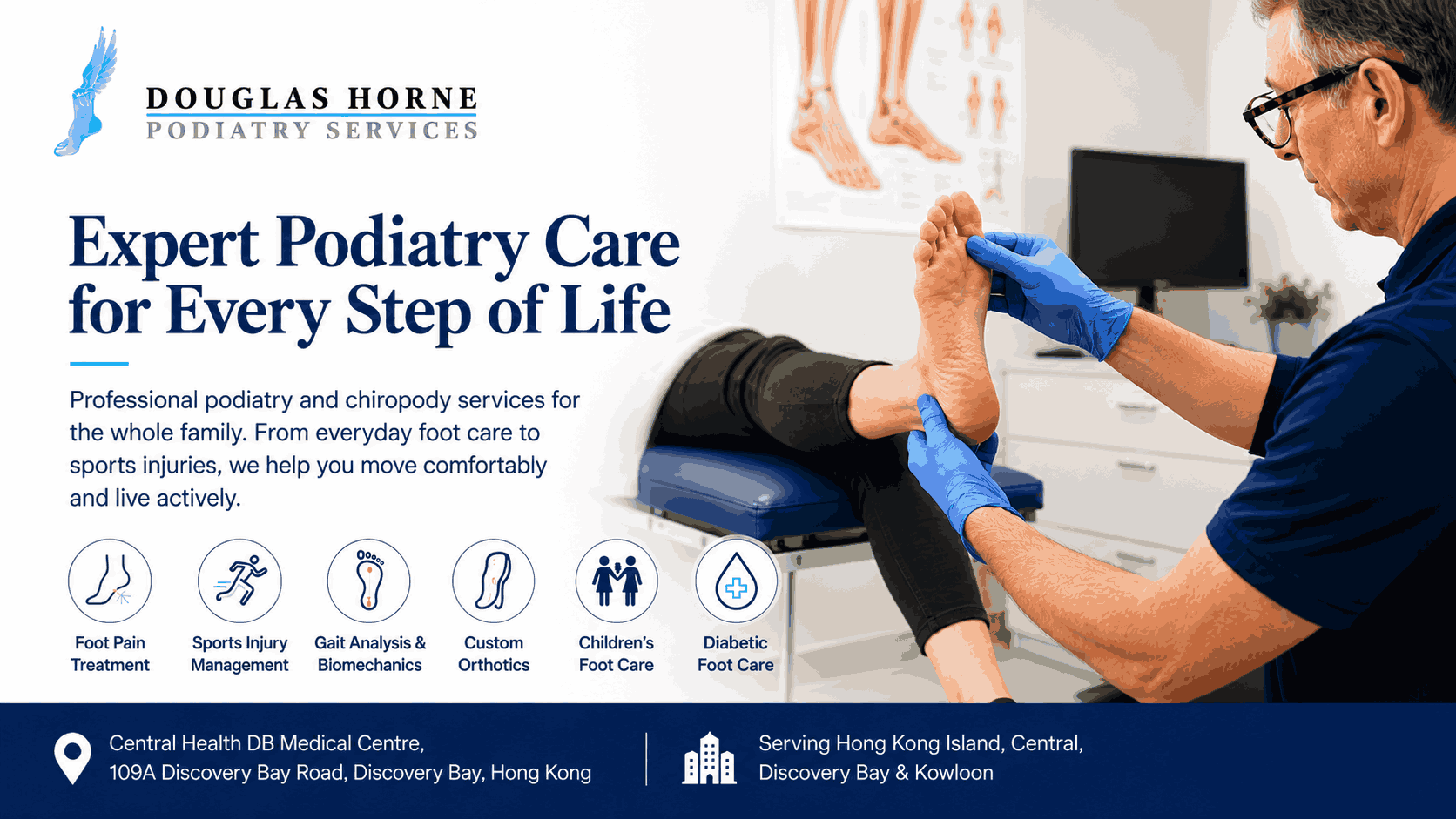
Many office workers in Hong Kong spend extended hours sitting at desks, standing during commutes, or walking between commercial areas such as Central and Admiralty. These daily habits can place continuous pressure on the feet, ankles, and lower limbs, particularly when combined with hard flooring, limited movement, and restrictive footwear.
Foot discomfort is frequently overlooked during the early stages. Over time, persistent symptoms may begin to affect posture, walking comfort, exercise, and daily productivity. Heel pain, arch strain, and pressure beneath the forefoot are among the most common concerns experienced by office professionals.
Long periods of standing, poor foot mechanics, calf tightness, and repetitive strain are all factors that may contribute to chronic foot discomfort and plantar fascia irritation.
Heel pain is one of the leading reasons office workers seek podiatric care. Many individuals notice sharp discomfort during their first steps in the morning or after sitting for long periods during the workday.
Common contributing factors include:
Long periods standing on hard surfaces
Tight calf muscles
Poorly supportive work shoes
Flat feet or unstable foot posture
Increased walking during commuting
Plantar fasciitis develops when excessive strain affects the connective tissue supporting the arch of the foot.
Daily commuting and prolonged walking throughout Hong Kong can lead to tired, aching arches by the end of the day.
This may occur because of:
Repetitive walking activity
Inadequate shoe cushioning
Flat foot posture
Reduced shock absorption
Persistent arch fatigue may eventually contribute to discomfort affecting the knees and lower limbs.
Tight footwear and prolonged standing can increase pressure beneath the ball of the foot. Some patients report symptoms such as:
Burning sensations
Tingling discomfort
Feeling pressure beneath the toes
Numbness during walking
High heels and narrow office shoes may increase stress across the forefoot area.
Long hours of desk work may contribute to calf muscle tightness, especially when movement during the day is limited.
Tight calves can place additional stress on:
The heel
The Achilles tendon
The plantar fascia
This pattern commonly contributes to ongoing heel discomfort and reduced ankle flexibility.
Pressure and friction from unsuitable footwear may cause thickened areas of skin that become painful during walking.
These commonly develop:
Beneath the ball of the foot
Between the toes
Around pressure points
Professional chiropody care may help reduce discomfort and improve walking comfort.
Many Hong Kong residents combine:
Long working hours
Daily walking
Stair and escalator use
Crowded commuting
Walking on hard pavements
Over time, these repetitive demands may overload the feet and contribute to ongoing discomfort, particularly when footwear lacks proper support.
Humidity may also increase the risk of excessive sweating, skin irritation, and fungal nail problems.
A podiatry assessment focuses on identifying the mechanical and structural causes contributing to foot pain.
Assessment may include:
Walking and posture analysis
Footwear assessment
Video gait analysis
Joint flexibility testing
Pressure distribution evaluation
Douglas Horne provides podiatric assessments, gait analysis, orthotic prescription, and chiropody treatment for patients experiencing foot and lower limb discomfort.
Treatment depends on the underlying cause and severity of symptoms.
Conservative podiatric treatment may involve:
Footwear recommendations
Stretching exercises
Pressure relief padding
Custom orthotics
Shock absorption support
Corn and callus treatment
Walking and running assessment
Activity modification advice
Supportive orthotics and conservative treatment approaches may help reduce strain on the plantar fascia and improve daily walking comfort.
Choose supportive shoes with cushioning
Avoid narrow footwear for prolonged use
Stretch calf muscles during work breaks
Alternate sitting and standing positions regularly
Replace worn footwear before support deteriorates
Avoid long walks in unsupportive dress shoes
Use podiatrist recommended insoles if needed
Keep feet dry in humid conditions
Yes. Long periods of sitting, standing, and walking on hard surfaces may increase strain on the feet and lower limbs.
Flat feet may increase stress across the plantar fascia and lower limb joints during prolonged standing and walking.
Pain that persists for several weeks, worsens over time, or interferes with daily walking should be professionally assessed.
Patients experiencing ongoing discomfort during work and commuting often seek professional care from Douglas Horne at a trusted Hong Kong Podiatry.