
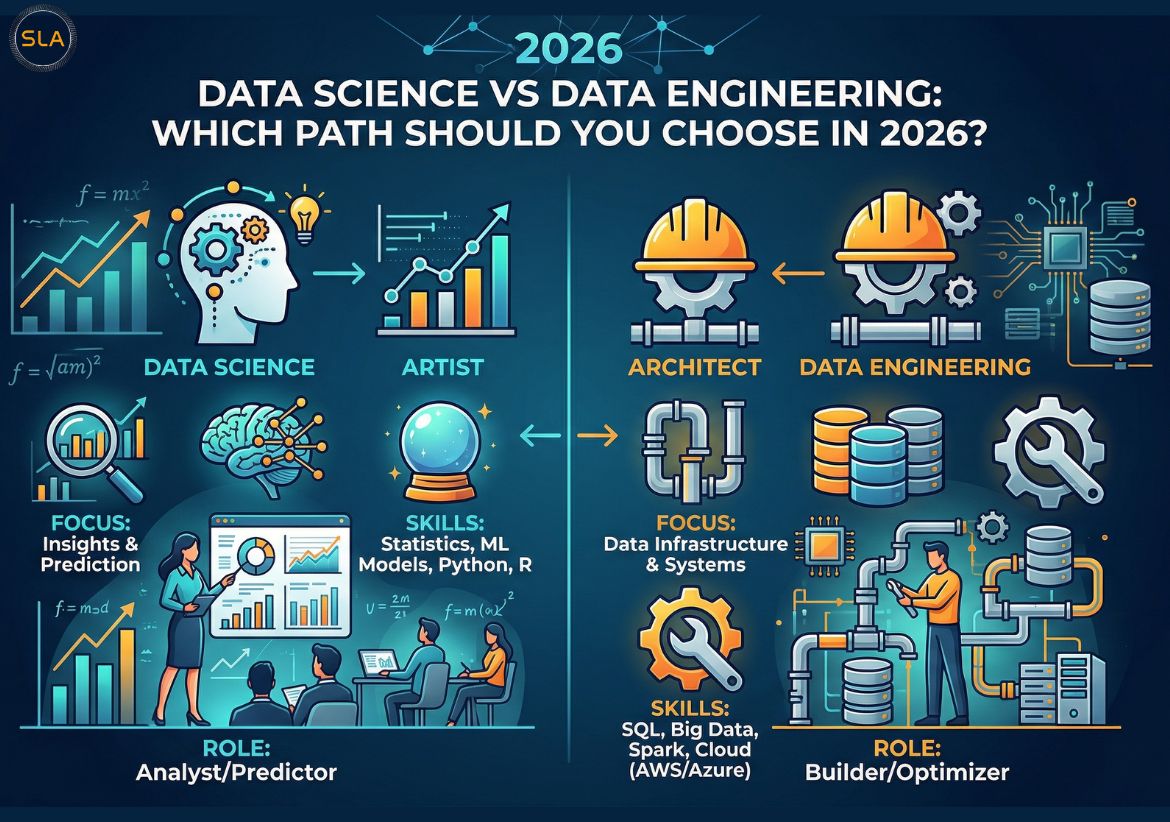
In today’s data-driven world, the term “big data” often dominates conversations, leading many organizations to believe that impact only comes at scale. However, the reality is that even small datasets can generate powerful insights—if they are properly managed and engineered. Before reaching massive data volumes, companies must first build strong data foundations. The discussion of Data Science vs Data Engineering becomes highly relevant. While data scientists focus on extracting insights, data engineers ensure that the data is clean, structured, and reliable. Without this foundation, even small data can become inconsistent and unusable, limiting its potential impact.
Engineering plays a critical role even when dealing with small datasets. Early-stage systems often lack structure, leading to issues such as inconsistent formats, missing values, and duplication. By implementing proper data pipelines and validation processes from the beginning, organizations can avoid these problems as they scale. Tools like Apache Airflow help automate workflows, while dbt (data build tool) ensures data is transformed into reliable, analysis-ready formats. In the context of Data Science vs Data Engineering, this highlights how engineers create a stable environment that allows data scientists to focus on meaningful analysis rather than spending excessive time on data cleaning.
The collaboration between data science and data engineering becomes even more important when working with limited data. In the debate of Data Science vs Data Engineering, small datasets require higher precision and quality, as there is less room for error. Data engineers ensure that every data point is accurate and properly structured, while data scientists apply analytical techniques to extract maximum value. Visualization tools like Tableau and Power BI help communicate insights effectively, enabling stakeholders to make informed decisions. This synergy ensures that even small data can drive significant business outcomes.
Building strong engineering practices early creates a solid foundation for future growth. As organizations expand and data volumes increase, well-designed systems can scale efficiently without requiring major overhauls. Cloud platforms and distributed processing tools, such as Apache Spark, can be integrated when needed, but the groundwork laid during the early stages remains crucial. Understanding the balance of Data Science vs Data Engineering ensures that both analytical and infrastructural needs are met. Ultimately, success in data-driven initiatives is not determined by the size of the data but by how effectively it is managed and utilized. By prioritizing engineering from the start, organizations can unlock big impact—even with small data.
